
Remittance Cost Calculator
Calculate Your Savings
How It Works
Traditional banks charge high fees for international transfers. Crypto transfers using stablecoins like USDT can save you up to 90% in costs.
Your Savings
$0.00
0%
When your savings lose half their value in a year, when banks freeze accounts without warning, and when sending money to family across borders takes days and eats up 15% in fees-what do you do? For millions in emerging markets, the answer isn’t waiting for governments or banks to fix things. It’s using cryptocurrency.
Why Crypto Isn’t Just a Speculative Asset Here
In the U.S. or Europe, people buy Bitcoin because they think it’ll go up. In Nigeria, Argentina, or Ukraine, people buy it because their local currency is falling apart. Turkey’s inflation hit 85% in 2023 and never fully cooled. By mid-2025, over $878 billion in crypto flowed into the country, according to Chainalysis. That’s not speculation-it’s survival. People are converting their lira into USDT, the dollar-pegged stablecoin, to keep what’s left of their income from vanishing overnight. In Argentina, where annual inflation has hovered near 200% for years, crypto mobile wallet usage jumped 16 times between 2022 and 2025. Users aren’t day-trading. They’re buying groceries with USDT at local stores that accept it. In Venezuela, where the bolivar lost over a million percent in value since 2018, 90% of daily purchases for some families now happen through Dash, a faster, cheaper cryptocurrency. These aren’t tech elites. They’re teachers, taxi drivers, small shop owners-people who need to eat and pay rent.The Remittance Revolution
Sending money home is one of the biggest pain points in emerging economies. The World Bank says the average cost to send $200 to Sub-Saharan Africa is 8.5%. In the Philippines, it’s 6.3%. That’s billions lost every year to middlemen. Crypto changed that. In Q2 2025, 17% of all remittances to the Philippines came through crypto channels-up from just 3% in 2023. A user on Reddit, ‘RemitFastUser123,’ documented sending $500 from California to Manila using USDT. Traditional services charged $41 in fees. Crypto cost $8. That’s an 8.2% savings. No bank delays. No middlemen. No surprise charges. Similar stories play out across India, Pakistan, and Kenya. Workers in Saudi Arabia or the U.S. send crypto to relatives who cash out via peer-to-peer (P2P) platforms like Paxful or Binance P2P. In Nigeria, where the naira lost 50% of its value against the dollar between 2023 and 2025, crypto became the only reliable way to preserve value. Twitter hashtags like #CryptoNigeria are filled with posts like: “Saved my rent money by switching from naira to USDT.”Who’s Using It-and How
Adoption isn’t evenly spread. Chainalysis’ 2025 Global Crypto Adoption Index, which adjusts for population size, put Ukraine, Moldova, and Georgia at the top. India, Pakistan, and Brazil led in total volume. But the real story is in the how. Mobile phones are the gateway. In Sub-Saharan Africa, only 45% of people have reliable internet. Only 60% own smartphones. Yet crypto usage is growing fastest in countries like Nigeria, Colombia, and India because apps are built for low-end devices. Platforms like Yellow Card in Africa let users buy crypto with airtime credits. In India, apps support 12 local languages. You don’t need a bank account. You don’t need ID. You just need a phone number and a QR code. Stablecoins dominate. They make up 30% of all global crypto transactions. In emerging markets, that number is closer to 50%. USDT, USDC, and even local stablecoins like Nigeria’s Naira-pegged NEX are the real workhorses. People don’t care if Bitcoin hits $100,000. They care if their $100 today still buys $100 worth of rice tomorrow.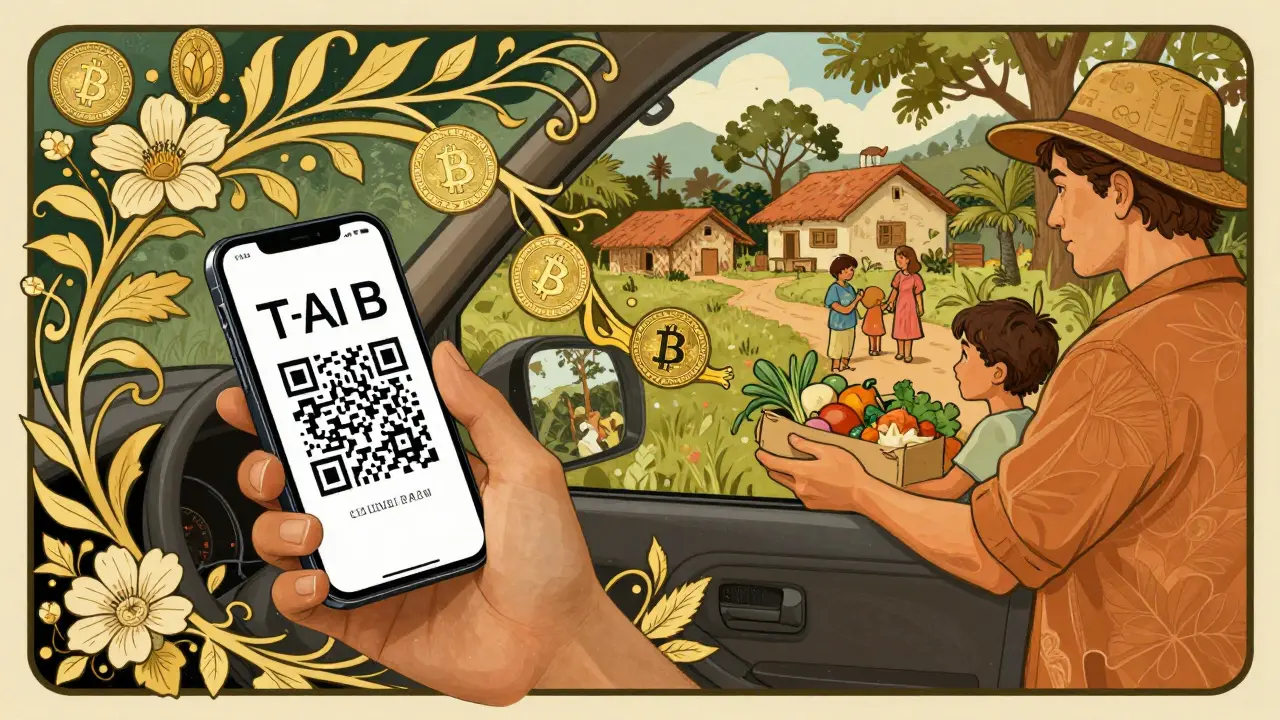
The Dark Side: Scams, Delays, and Regulatory Chaos
It’s not all success stories. In Q2 2025, Nigerian authorities reported 1,247 verified crypto fraud cases totaling ₦850 million ($567,000). New users are targeted with fake apps that steal private keys. “I downloaded a ‘Binance Lite’ app,” one user posted on Reddit. “It looked real. I lost $1,200 in minutes.” Withdrawal delays are common. Binance Colombia got a 2.8/5 rating on Trustpilot after users waited 14 to 21 days to cash out during the March 2025 market crash. Exchanges freeze withdrawals when liquidity dries up. In countries with weak banking systems, there’s no safety net. Governments are caught off guard. Nigeria banned crypto-to-fiat conversions in 2023, then partially reversed it in 2024. India slapped a 30% tax on crypto gains in 2022, then added a 1% tax on every transaction in 2024. By mid-2025, they were drafting formal exchange regulations. Brazil launched a regulatory sandbox for stablecoin issuers. But in 68% of developing countries, crypto’s legal status is still unclear. That uncertainty scares off banks, makes it harder to get insurance, and leaves users exposed.Why This Isn’t a Bubble-It’s a Bridge
Critics say crypto is a speculative bubble. But look at the data. Global crypto ownership hit 562 million people by 2024-a 33% jump from 2023. Over 58% of all retail crypto transactions happened in emerging markets, even though these countries make up only 42% of the world’s population. That’s not speculation. That’s necessity. Unlike in the U.S., where institutional investors drive adoption, here it’s grassroots. People aren’t waiting for approval. They’re building alternatives. They’re using crypto not as an investment, but as infrastructure-like electricity or water. In places where the system fails, crypto fills the gap. A 2025 University of Cape Town study found that users in emerging markets need 2-3 weeks to safely manage self-custody wallets. In the U.S., it’s 1-2 weeks. Why? Because they’re starting from zero. No prior financial education. No safety nets. They’re learning on the job. And they’re succeeding.
The Future: CBDCs, Stablecoins, and the New Financial Layer
Governments aren’t ignoring this. The World Economic Forum predicts that by 2027, 30% of emerging market central banks will launch Central Bank Digital Currencies (CBDCs) that can interact with stablecoins. India’s Reserve Bank is testing a digital rupee. Brazil’s central bank is exploring interoperability with USDT. This isn’t about killing crypto-it’s about controlling it. But here’s the twist: stablecoin volume hit $4 trillion globally in 2025, up 83% from 2024. That’s not just remittances. It’s cross-border trade, microloans, and even payroll for gig workers. A Kenyan delivery driver gets paid in USDC. A Mexican farmer sells corn to a distributor in Texas via USDT. These aren’t fringe activities anymore. The real question isn’t whether crypto will grow in emerging markets. It already has. The question is whether traditional institutions will adapt-or get left behind.What This Means for You
If you’re an investor looking at emerging markets, don’t just look at stocks or bonds. Look at the infrastructure underneath. The people using crypto aren’t gambling. They’re rebuilding. They’re creating financial resilience where none existed. If you’re sending money abroad, crypto is now the cheapest, fastest option in most cases. Just use trusted platforms. Avoid shady P2P deals. Stick to USDT or USDC. Verify the recipient’s wallet address twice. If you’re in an emerging market yourself-don’t wait for permission. Learn how to use a wallet. Store your keys safely. Join local Telegram or WhatsApp groups. Ask questions. The community is bigger than you think. Crypto didn’t come to fix the system. It came because the system didn’t care to fix itself. And in places where the old rules don’t work, new ones are already being written.Why is crypto growing faster in emerging markets than in developed countries?
In emerging markets, crypto is used as a practical tool-not an investment. People turn to it because their local currencies are unstable, banks are unreliable, and remittance fees are too high. In the U.S. or Europe, crypto adoption is driven by institutional interest, speculation, or regulatory clarity. But in places like Nigeria, Argentina, or Ukraine, it’s about survival. People use crypto to protect savings, send money home, and buy essentials when traditional systems fail.
Are stablecoins safer than Bitcoin in emerging markets?
Yes, for everyday use. Bitcoin’s price swings make it risky for buying groceries or paying rent. Stablecoins like USDT or USDC are pegged to the U.S. dollar, so their value stays steady. That’s why they make up half of all crypto transactions in places like Nigeria, Kenya, and Colombia. People use Bitcoin only if they’re holding it long-term. For daily life, stablecoins are the default.
Can I use crypto to send money to family in a country with strict crypto laws?
Yes, but carefully. Even in countries like Nigeria or India, where crypto-to-fiat conversions were banned, peer-to-peer (P2P) trading still works. People use platforms like Paxful or Binance P2P to trade crypto for cash via mobile money or bank transfers. The transaction happens off-exchange, making it harder for regulators to track. But always use verified traders and avoid large, one-time transfers. Smaller, frequent transfers are safer.
Is crypto a good hedge against inflation?
Stablecoins are. Bitcoin and Ethereum are not reliable hedges in the short term because their prices can swing wildly. But stablecoins like USDT act like digital dollars. If your local currency loses 50% of its value in a year, holding USDT keeps your purchasing power intact. In Turkey, Argentina, and Nigeria, millions are using stablecoins exactly for this reason-not as investments, but as a store of value.
What are the biggest risks of using crypto in emerging markets?
The biggest risks are scams, withdrawal delays, and lack of legal protection. Fake apps steal private keys. Exchanges freeze withdrawals during market crashes. And if you get hacked or scammed, there’s usually no way to get your money back. Also, in many countries, crypto isn’t legally recognized, so you can’t sue or file a complaint. Always use reputable platforms, enable two-factor authentication, and never share your recovery phrase.
Do I need a smartphone to use crypto in an emerging market?
Yes, but not a high-end one. Most crypto apps work on Android phones under $100. Platforms like Yellow Card and Binance P2P are optimized for low-end devices and slow internet. You don’t need 5G or a big screen. You need a phone that can run WhatsApp or Facebook-that’s enough. Some services even let you buy crypto using airtime credits, so you don’t need a bank account or credit card.
How do I start using crypto safely in an emerging market?
Start small. Download a trusted app like Binance, Coinbase, or Yellow Card. Buy $10-$20 in USDT. Practice sending it to a friend or saving it in a wallet. Learn how to store your private key or recovery phrase offline-on paper, not in your phone. Join local Telegram or WhatsApp groups to ask questions. Never send crypto to someone you don’t know. Never click links from strangers. And never, ever share your recovery phrase with anyone-not even customer support.
Mark Vale
you ever wonder how many of these "survival crypto" stories are just shills for coinbase or binance? i’ve seen the same 3 stablecoin wallets move $200M in 48 hours across nigeria, argentina, and india-same ip addresses, same time stamps. this isn’t financial freedom, it’s a laundering pipeline dressed up as hope. they’re not buying rice with usdt-they’re buying silence. the govts are asleep, the exchanges are laughing, and the people? they’re just the middlemen in someone else’s game.